
Driving Zone: Offroad Lite
AveCreationRacing
4.287.00 Reviews
- Version
- 0.25.50
- Installs
- 1.00M
- Age Rating
- Everyone
Screenshots
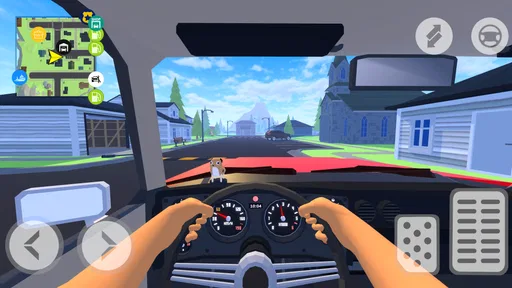
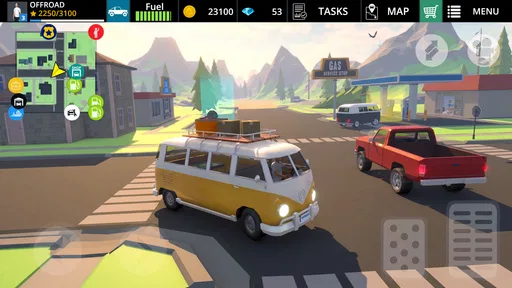
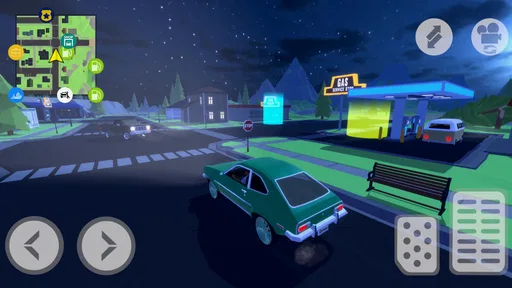
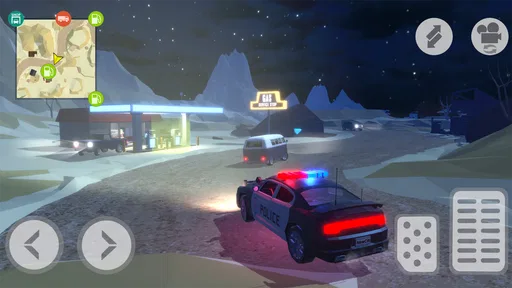
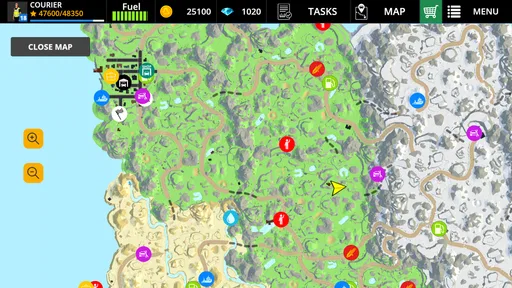
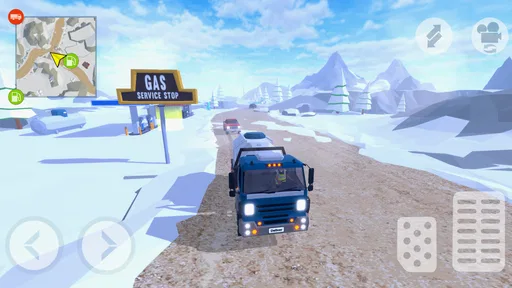
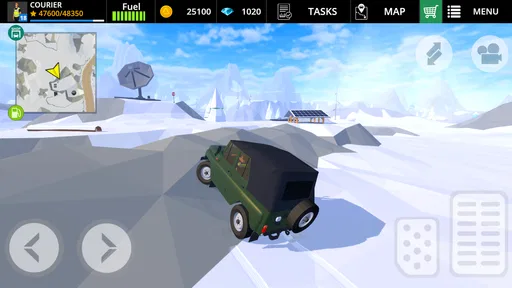
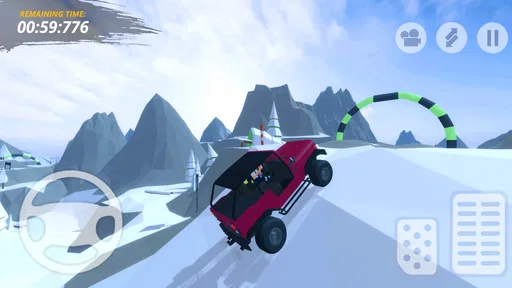
Our Review of Driving Zone: Offroad Lite
 Analysis by Appyee
I approached Driving Zone: Offroad Lite as a game for the moments when I want to drive rather than compete in a tightly controlled race. It is a free racing game from AveCreation, built around off-road driving across mud, sand, and snow. That difference matters: the appeal is less about memorizing a perfect circuit and more about learning how the car behaves when the surface keeps changing.
My first impression was that it sits between a casual driving toy and a more focused off-road simulator. You can pick it up without studying a long rulebook, yet the loose surfaces give ordinary turns and climbs more weight than they would in a conventional arcade racer. I enjoyed that relaxed rhythm, especially when I stopped treating every drive like a race and started using it as a short exploration session.
The game is available free of charge and is marked suitable for Everyone. It has passed the one-million-install mark, while its average rating is 4.2 from around 8.2 thousand ratings. Those figures suggest a healthy audience, but they do not remove the need to understand what kind of driving experience this is. If you want licensed cars, a deep competitive ladder, or a highly technical simulation, this may feel lighter than expected.
Getting comfortable before chasing difficult terrain
I’d use this section to settle into the controls before making rough terrain the main test. A helpful next move is to repeat one gentle turn on different ground and notice which surface calls for the smallest correction; that gives you a personal reference point without turning the first drive into a race.
What the first launch feels like
On a first launch, I recommend resisting the urge to drive as quickly as possible. The useful early goal is simply to understand the relationship between steering, throttle, and the ground beneath the vehicle. Mud, sand, and snow do not feel interchangeable, so a turn that seems safe on one surface can become awkward on another. The game becomes more enjoyable once you accept that correcting a slide is part of the drive rather than a sign that the session has failed.
The current version is 0.25.50, and the game supports devices running Android 7.1 or later. That makes it accessible to many older Android phones and tablets, although actual comfort will still depend on the device and how smoothly it handles the game. I would begin with shorter sessions, particularly on an older phone, and pay attention to whether steering remains responsive before committing to a long drive.
There is no need to invent a complicated preparation routine. Start with the default driving experience, keep your first route simple, and use the opening minutes to test how much steering input the car needs. Small movements are usually easier to correct than dramatic swipes or taps. This is especially important on snow, where overcorrecting can turn a manageable slide into a full loss of control.
A practical setup for a first-time player
My preferred setup is deliberately conservative. I hold the device comfortably, keep my thumbs away from the edges of the screen, and make one change at a time. If the car feels difficult to control, I first reduce the amount of steering I apply rather than assuming the vehicle is too weak or the route is impossible. That simple adjustment made the early drives feel much less frustrating.
I also suggest treating the first session as a test of control layout rather than a test of speed. Find out where acceleration and braking respond best for your hands. Then drive a short distance on one surface and repeat the same basic turn on another. This gives you a useful reference point: you learn whether the problem is your input or the terrain.
One subtle advantage of this approach is that it separates two kinds of mistakes. A missed turn caused by excessive steering is a control problem; a vehicle that struggles through a soft section is a terrain problem. Keeping those apart helps you improve faster. Instead of randomly changing everything, you can adjust your driving to the actual cause of the mistake.
Because the game includes in-app purchases ranging from $1.99 to $24.99 per item, I would not spend anything during the first few sessions. First decide whether the basic driving loop holds your attention. A free game is most useful when you can establish that its ordinary play is enjoyable before considering optional spending.
Your first meaningful success
For me, the first satisfying achievement was not completing a route at top speed. It was crossing a difficult patch without fighting the steering the whole way. I approached the surface slowly, kept my inputs modest, and allowed the car to settle before turning. That moment showed me what the game rewards: patience, observation, and a willingness to trade speed for stability.
A good first target is therefore simple. Choose a short drive, identify one section that looks awkward, and aim to pass it cleanly rather than dramatically. If you slide, do not immediately restart. Ease off, straighten the car, and see whether recovery is possible. Learning to rescue a poor line is more valuable than repeating an easy section until it looks perfect.
This also makes the game approachable for people who are not regular racing players. You do not need to understand racing lines or advanced vehicle tuning to get a result. The basic lesson is physical and easy to recognize: loose ground needs gentler control, and speed makes mistakes harder to correct. Once that clicks, the environments feel more readable.
A realistic everyday use case is a short break between tasks. I can imagine playing for a few minutes while waiting for an appointment, choosing one route and focusing on a single clean crossing. The game works well in that role because a drive can be meaningful without requiring a full evening. However, if you need a game that pauses naturally after a very specific objective, the open-ended driving style may feel less structured.
Where new players commonly get confused
The biggest confusion is expecting every surface to behave like ordinary road. Mud, sand, and snow are not just visual changes in this game; they alter how confidently the car responds. When the vehicle starts drifting, many new players turn harder in the opposite direction. I found that this often makes the situation worse. A lighter correction and a little patience are usually more useful than a sudden steering movement.
Another common mistake is judging progress only by speed. Off-road driving often looks slow because the car is working through a difficult section. That does not mean the drive is going badly. A controlled climb or a clean recovery can be a better result than a fast approach followed by a spin. I began enjoying the game more once I measured success by control rather than by how quickly I reached the next point.
It is also easy to assume that a failed attempt means the route is beyond your ability. Sometimes the real issue is the approach angle. Try entering a rough patch straighter, reduce your speed before the surface changes, and avoid making a sharp turn at the same moment the car loses grip. These are small changes, but they turn the game from guesswork into a series of understandable experiments.
The word “Lite” is worth keeping in mind when setting expectations. I would not approach this as a full replacement for a large console-style off-road simulation. Its strength is immediate driving and accessible terrain, not an enormous presentation built around every possible motorsport detail. Players looking for deep progression, extensive competitive features, or a highly realistic vehicle model may prefer a more specialized alternative.
How it compares with ordinary racing games
Compared with a conventional track racer, this game gives up some of the clarity of fixed asphalt in exchange for a more flexible sense of place. In a circuit racer, I usually think about braking points, lap consistency, and overtaking. Here, I think more about surface changes, approach angles, and whether the car will remain settled after a turn. That makes it a better choice when I want exploration-style driving rather than head-to-head pressure.
Compared with a pure arcade driving game, it asks for slightly more restraint. The car is not simply a button-controlled object that can be thrown into every corner. Loose terrain makes reckless input visible. At the same time, it remains easier to approach than a demanding simulator because the game does not require specialist knowledge before the first drive.
That middle position is the main reason I would recommend it to a friend who enjoys cars but does not want a complicated career mode. It is also a sensible option for someone who likes changing scenery and wants the roads to feel less predictable than a repeated circuit. On the other hand, a player who mainly enjoys online competition, lap records, or carefully balanced multiplayer races should look toward a different kind of racing game.
Three habits that make the driving better
First, I use a “slow entry, steady exit” habit. Before a surface change, I reduce speed early instead of braking after the car has already begun sliding. Then I keep the steering calm until the vehicle is stable again. This is more reliable than trying to correct everything in the middle of a rough patch.
Second, I replay difficult areas with one variable changed. On one attempt I approach with less speed; on the next I alter the steering angle; on another I try to stay straighter. This turns each restart into a small test. It is a better workflow than repeating the same failed movement and hoping the result changes.
Third, I use recovery as practice. When the car begins to drift, I focus on getting it pointed in a useful direction rather than immediately chasing the original line. That skill matters because off-road driving is rarely perfectly tidy. A player who can recover will make more progress than someone who only knows how to drive when everything goes right.
These habits are not advertised as separate features, but they are where much of the game’s practical depth comes from. The terrain creates small decisions, and those decisions give short sessions a reason to continue. I found myself returning not because every drive was dramatically different, but because I could feel a specific mistake becoming easier to manage.
Who should install it, and who should skip it
I think this is a good fit for first-time off-road players, casual racing fans, and anyone who enjoys handling a vehicle through mud, sand, and snow without committing to a demanding simulation. It is especially appealing if you prefer self-directed driving to a strict sequence of races. The free entry point also makes it easy to test the central idea before deciding whether it deserves space on your device.
I would be more cautious about recommending it to players who need a strong competitive structure. If your favorite part of racing is comparing lap times, overtaking rivals, or building a long-term championship career, this may not provide the kind of motivation you want. The same applies to anyone who dislikes learning through trial and error. Off-road control is more satisfying when you are willing to adjust your approach.
Families may appreciate the Everyone content rating, but younger players can still find the loose handling frustrating at first. I would show them how to make small steering corrections and frame the first session as exploration rather than winning. That removes pressure and gives them a clearer way to understand why the car behaves differently on each surface.
What to do after the first successful drive
Once you can cross a difficult section with reasonable control, the next step is to add speed gradually. Do not change speed, steering style, and route choice all at once. Keep the same surface and approach, then increase pace slightly. If the car becomes unstable, return to the previous speed and work on a smoother exit.
After that, try linking two different surfaces in one session. The useful challenge is not simply surviving each area separately; it is noticing the transition and changing your driving before the car reacts. This is where the open-world off-road idea becomes more interesting than a standard track. You have to read what is ahead rather than rely on one fixed technique.
I would also keep purchases out of the decision until the basic loop has proved itself. The available items cost between $1.99 and $24.99 each, so the sensible question is not whether they exist but whether they solve a problem you genuinely have. If you are still learning the controls, spending will not replace practice. If you already enjoy the driving and understand what you want to improve, you can make a more informed choice.
Released on July 2, 2022, the game has had time to establish itself, and its current version shows that it remains an active product rather than an abandoned experiment. Still, I judge it mainly by the immediate experience: it gives me a straightforward way to drive through varied off-road environments, with enough resistance from the terrain to make careful input worthwhile.
My final recommendation is positive but specific. Install Driving Zone: Offroad Lite if you want a free, approachable off-road driving game and are happy to build skill through small corrections. Begin slowly, learn how each surface changes the car, and treat recovery as progress. Skip it if you need intense competition, a deep simulation, or a clearly staged campaign. For the right player, its best quality is simple: the road itself becomes the challenge, and even a short drive can end with a genuine sense of improvement.
Verdict
Strengths of Driving Zone: Offroad Lite
- Large off-road maps provide plenty of space for free driving.
- Responsive vehicle controls make drifting and climbing enjoyable.
- Vehicle tuning options add variety beyond simple exploration.
- Works well for short play sessions without requiring a complex setup.
- Lightweight Lite version is easier to install on devices with limited storage.
Limitations of Driving Zone: Offroad Lite
- The Lite version includes fewer vehicles and features than the full game.
- Graphics can look dated on newer phones, especially at close range.
- Some terrain areas feel repetitive after extended play.
- Off-road physics occasionally cause awkward flips or unrealistic landings.
- Advertising may interrupt gameplay or encourage optional in-app purchases.
Other Releases by AveCreation
View All
Driving Zone: Offroad
Racing4.0
Similar Picks in This Category
View All
Hill Climb Racing
Fingersoft4.3

Dr. Driving
SUD Inc.4.2

Traffic Rider
skgames4.5

Asphalt 8 - Car Racing Game
Gameloft SE4.6

Race Master 3D: Car Racing
Beresnev Games4.6

Extreme Car Driving Simulator
AxesInMotion Racing4.3
Frequently Asked Questions
What is Driving Zone: Offroad Lite?
Driving Zone: Offroad Lite is an off-road driving game focused on exploring rough terrain, completing driving challenges, and controlling a variety of vehicles in open environments. Instead of traditional racing alone, the game emphasizes careful handling across dirt roads, hills, and uneven surfaces. It is designed for players who enjoy relaxed exploration as well as more demanding off-road driving situations.
Can I play Driving Zone: Offroad Lite without an internet connection?
Driving Zone: Offroad Lite can generally be played offline for its main driving experience, which makes it convenient when you are traveling or have limited mobile data. However, some features may depend on an internet connection, including advertisements, updates, analytics, or other online services. It is recommended to launch the game once while connected so that all required files and resources can load correctly.
What vehicles and driving environments are available?
The game offers off-road vehicles intended for driving across challenging landscapes rather than smooth racing circuits. Depending on the version installed, players may find different vehicle options, terrain types, routes, and environmental conditions to explore. Vehicle availability can also be connected to progression or in-game requirements, so not every option may be accessible immediately after installation.
Is Driving Zone: Offroad Lite suitable for beginners?
Yes, beginners can enjoy Driving Zone: Offroad Lite, although the vehicle handling may require some practice. Off-road surfaces are less predictable than paved roads, and accelerating too aggressively or approaching slopes at the wrong angle can make control more difficult. New players should begin slowly, learn the steering and camera controls, and use open areas to become familiar with the vehicle physics.
Does Driving Zone: Offroad Lite contain ads or in-app purchases?
The Lite edition may include advertising or optional in-app purchases, depending on the platform, region, and current version of the application. Advertisements can appear between activities or while using certain features, while purchases may provide additional content or convenience. Before downloading, check the official Google Play or App Store listing for the latest details about pricing, permissions, and available transactions.
Play our best games!


